
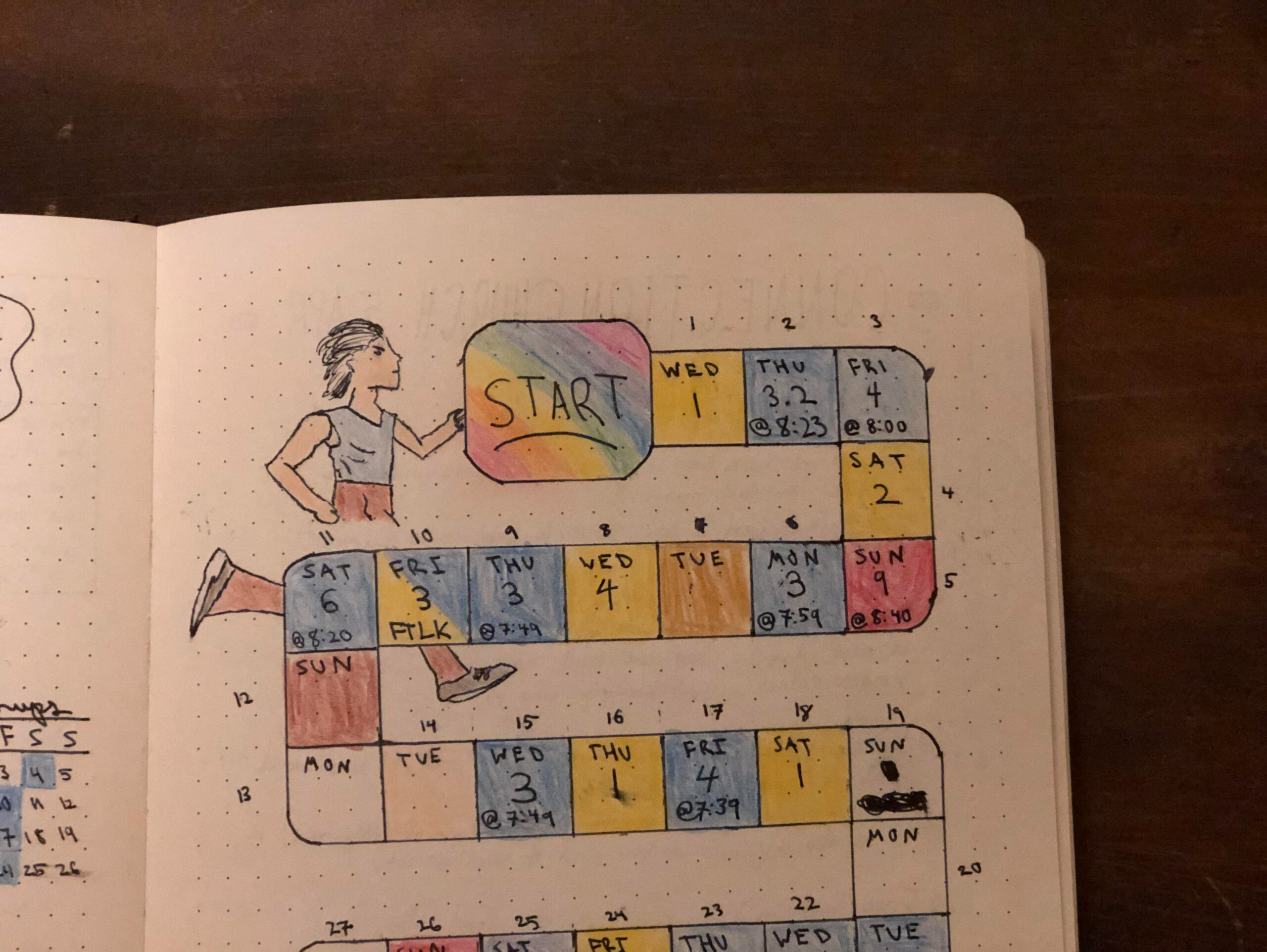
One of the most common questions among new runners is “how often should I run?” This question can be answered in several different ways depending on the athlete’s goals and current fitness level. As a rule, you should start out running fewer days a week (around three) and progress to running five or six days a week.
Another way to phrase this question is what happens to your body on days when you don’t run, and how often do you need to run to maintain or improve your current fitness level?
Depending on the workout – whether you hit the track for intervals or pounded pavement for two hours – your body takes different time periods to recover. For less intense workouts, you can often recover within 4-8 hours. For more intense workouts it might take a day or two for your muscles to fully recover. Once your body has recovered, however, it begins to slowly degrade, and you start to lose fitness.
“If you don’t run for several weeks, your body’s ability to store glycogen will drop and you will see negative effects across the board”
While you likely won’t feel many effects of this if you only miss a workout or two, when given time to build up the effects can seriously hinder any training plan. The first thing you will notice is a decrease in your VO2 Max and lactate threshold. After about 5-10 days of not running it will become much harder to maintain your speed over time. Your 5k times will plummet and your tempo runs will suffer. If you don’t run for several weeks, your body’s ability to store glycogen will drop and you will see negative effects across the board.
In the same way that the frequency of training needed to see improvement depends on a runner’s individual level of fitness, the negative effects of not running are not distributed equally across the diverse strata of athletes. Elite runners need to run more often than average or beginner runners to continue improving because their bodies are already finely tuned and optimized for performance. At a high level, every difference in performance is more noticeable; the more fit a person is, the more sensitive that person’s body is to change. While taking a full day of rest between each workout will not negatively affect most average runners and, in fact, is recommended for those just starting out, it would be detrimental to a more advanced runner who normally trains six days a week.
As you progress as a runner you should slowly add more workouts into your schedule. This does not mean running as hard as you can every day, but, rather, replacing rest days with active recovery days. Instead of taking the day off to rest your muscles go for a slow, easy run. These types of workouts are often at a much slower pace than you usually run at. While you might typically run several miles at an 8:00 min/mile pace comfortably, your recovery runs might be at a 9:30 pace. Active recovery is often preferred to strictly rest days because it allows your blood to keep flowing more efficiently and helps your body flush lactic acids and toxins more quickly than simply not running. That said, perhaps the biggest challenge on active recovery days is to maintain a slow, even pace. Don’t speed up just because you feel good. Your body will thank you.
At the end of the day, you probably don’t need to worry too much about your fitness degrading if you already have a set routine and are running consistently. I’ve posted previously about the importance of consistency in running as well as some ways to help make running a habit. Unless you’re an elite runner with a strict, tailored training program, your biggest stumbling block to avoid with frequency is simply taking too many days off. It is incredibly easy to take one day off and, before you realize it, one day has turned into one week and every day you don’t run makes it harder to get back into the rhythm. Limit your rest to one or two days. Your body will thank you.
What has been your experience with taking time off? How many days a week do you typically run and how has your training frequency impacted your performance?
If you liked this article, check out: A Few Thoughts on Consistency in Running.