The Dastardly Implications of Running Too Fast

For most of us, we run because we enjoy the feeling of getting outside and pushing our bodies to the limit. It’s exhilarating to run fast. It’s an accomplishment to finish a threshold or tempo run and see that you were able to hold an even faster pace over a set distance. As runners, we are obsessed with the idea of getting faster, which can often lead us to run as fast as we can on every run.

While this trait is one of the things that leads many runners to success in training, it can also be something that holds people back when activated in the wrong context. If you haven’t picked up on it yet, I’m talking about one of the key elements of any training plan: the easy run.

A cookie-cutter training week consists of three main elements. These include 2-3 speed or tempo workouts, a long run, and maintaining/increasing your weekly mileage. But if you have two workouts and a long run in your week this leaves at least two, usually three other runs to get in during the week that aren’t high intensity. These are either easy or recovery runs.

There is a slight difference between the easy run and the recovery run. The easy run is sometimes called a low heartrate run and usually takes place around a 1:30 minute slower pace than your 5K race pace. Of course, this will be different for everyone, but this is a good guideline to follow at first. The goal is to keep your heartrate below 150 bpm to expand your aerobic base. The goal is to target your low heartrate zone. A recovery run, though similar, has a different goal. The purpose is specifically to allow your muscles to recover from the previous workout and prepare for the next workout. These runs should be paced between 2:00-2:30 minutes slower than your 5K race pace and do not target the aerobic zone. There is certainly some overlap in terms of goals and execution, but it is important to distinguish between the two types of runs.

One thing that both runs have in common is that they require you to run slower than you would normally run during a workout. While this may seem desirable to some people, it is more difficult in practice. It is too easy to feel good and push harder than you need to, which results in you not reaping the benefits of the run. If you go out on a recovery run and that run turns into a fast-paced workout then not only have you not put your muscles in a position to recover, but you won’t be able to put the most effort into the next day’s run.

Running fast is great and it’s what we all enjoy and work towards, but you can’t sprint every run. It’s counterintuitive, but running slow is essential to running faster and having the discipline to hold yourself back on those easy and recovery runs is imperative to building a foundation for longer, faster threshold efforts and to allowing your muscles to work out the lactic acid before a tough workout the next day.

How do you incorporate slow runs into your training plan? Do you struggle to keep your pace and heartrate down? If not, what tips and tricks do you have for maintaining quality on easy days? Leave a comment below to tell us about your experience with running slow to run fast.

If you liked this article, check out: The Dastardly Implications of Running Too Slow.

Workout Wednesdays #1

Welcome to the first of (hopefully) many Workout Wednesdays. The goal of this column is to create a set of shorter blogs targeted specifically towards providing newer runners with a tangible place to start running beyond just going out to jog a few miles. I do my speed workouts on Wednesday, which is why it made perfect sense to post these workouts in the middle of the week. I find it to be an ideal time a few days after my Monday tempo run and before my Saturday long run, but you can incorporate this into your plan wherever it makes sense. If you have a go-to workout that you run regularly and want to share with other readers, please reach out through our contact page to be featured in a future Workout Wednesday.

This week’s workout is all about controlled speed. Ideally you should run on a track, but this workout can be performed anywhere so long as you have a decent quarter-mile stretch. Focus on maintaining your pace throughout each iteration, keeping your strides consistent. Don’t burn out on the last turn. Take about a minute to a minute and a half to recover after each 400 and don’t forget to hydrate! Don’t skip the warmup or the cooldown… Though the meat of the workout is in the 400s, the bookend miles are essential to preparing your muscles before the workout and helping them recover afterward.

The Workout:

1-2 miles Warmup @ easy pace

4x400m @ 30 seconds faster than 5K Pace

Rest

4x400m @ 20 seconds faster than 5K Pace

1-2 miles Cooldown @ easy pace

Now that you’re finished, go down a recovery drink and definitely do not forget to stretch!

Let us know how the workout went and how we can improve in the comments below. Was anything about the workout unclear? If you have a workout you want to share reach out via our contact page and don’t forget to follow the blog to get these delivered straight to your inbox.

If you enjoyed this workout, check out: Workout Wednesdays #2.

Consistency in Running: Accountability Matters!

What is the most important thing you can do right now to get better at running? It’s no secret, but the simple act of turning the doorknob, getting out onto the pavement, and getting a run in – regardless of the distance – is the easiest way to progress. I’ve written before about the importance of making running a habit. Consistency is the key ingredient to improvement; you can have the best training plan in the world, but if you don’t take the time to execute it then you won’t make any real progress.

It’s important to be internally motivated to run, but sometimes even the strongest wills fail. Sometimes a little rain, a few inches of snow, or a blazing summer sun can be enough to convince you not to venture outside.

We all know the feeling. We know we should be outside, getting our run in. We crave it to a certain extent but dread it just enough – for whatever reason – to convince ourselves it’s better just to stay inside. We can run tomorrow. Our internal motivation fails and, with it, our running progression.

This is where accountability becomes essential to building consistency in running. Because it’s difficult to lean solely on yourself to stay motivated, it helps to have someone else reminding you why you run. This can be anyone, but it helps for them to be somebody you interact with daily, so that they can easily ask you how your plan is going. For many people this might be a spouse. After all, who knows you better and can easily sense when you might be feeling like skipping a workout? Other good options might be a roommate, a coworker, or a parent depending on your individual situation.

This might look different for different people. For some folks it is good enough just to let their accountability partner know they are trying to run four or five days a week. Runners who struggle with discipline in workouts might want to share their running plan with their spouse or roommate. After all, it’s easy to go out for a tempo run and not hit your threshold heartrate either because you ran too slow or because you got excited and ran too fast. If you don’t have accountability, your long runs on the weekend have more of a tendency to get shorter and shorter.

Another good option is to run with a group or with a running club. This has the added benefit of sharing the workout with others, which should greatly contribute to your overall motivation. Not to mention that when you plan to run with others it is a lot harder to decide not to run simply because you aren’t feeling it. There are a few other ways to build accountability in running, though they certainly aren’t for everyone. Logging your runs on apps like Strava and Nike Run can help because they allow your friends to see what kinds of miles you’ve been putting in – or haven’t been putting in. Though I love Strava itself, I’m not a fan of using the app as your accountability function. It can too easily become an unhealthy relationship with running in that you are just trying to foster an image of you as a runner. These apps can be a great training tool, but that’s about all they should be used for.

If you’re struggling with motivation to run it can be useful to ask someone, you’re close with to help you stay accountable. Sometimes we all need someone to ask us how our training is going to stay on track. After all, it can be difficult to stay faithful when the snow is coming down or the thermostat reads triple digits. Having a buddy along is a great way to keep consistent in your training.

Do you have a running accountability partner? How do you stay motivated and consistent when the conditions aren’t ideal?

If you liked this article, check out: How to Build Your Running Baseline (And Why It’s Important).

Strength Training: Why I Lift Weights as a Runner

One misconception runners can fall into is that the only thing they need to be doing in training is running. Certainly, there is some truth to the idea that in order to get better at running you should run. But this can easily lead people to believe that the only thing that makes you better at running is, specifically, running.

It’s true that the majority of your time spent working out as a runner should be spent on the track, the trail, or the treadmill. Pounding the pavement is an essential piece of the equation, but it is not the only thing that matters. Other elements of the equation include nutrition and recovery, but in terms of working out it is vital that runners who want to take their performance to the next level take the time to get into the gym.

Strength training is a key baseline for most sports. Weightlifting helps with three specific competencies in running: Power and efficiency, economy, and injury prevention.

While running faster is the end goal of our training, lifting weights several days a week can help build power, a component of fitness difficult to build on the track, and efficiency. Composite lifts such as the deadlift and the clean and jerk help build explosiveness, which translates to a stronger transfer of power from your legs to the ground. This also helps increase your endurance in longer runs because it allows you to save energy on every stride, contributing to an overall increase in efficiency.

Research has shown that while VO2 max is essential to endurance, it is not the sole factor in performance. Over time, resistance training improves running economy by up to 8%. This is partially because as muscles in the leg become stronger they become better suited to support proper running technique.

Finally, perhaps the most important reason to incorporate strength training into your running plan is that it helps prevent injuries. Weightlifting can help you target weaker muscles more specifically. This is crucial to finding and eliminating weak points in legs and other muscles. Running puts a lot of strain on your ligaments, joints, and muscles. While your legs will become a bit stronger by running, cardio usually isn’t enough to strengthen them to the point where they can withstand constant running. By getting in the gym and strengthening the rest of your body you will be less susceptible to injury.

Of course, finding time to go to the gym on top of running four or five times a week can be tough. You should start adding in strength work gradually, perhaps with just one or two lifts per week. The main focus should still be on getting the miles in; think of your gym workouts as an accent or supplement to your main program.

At the end of the day, strength training is a great way to take your running to the next level. While you might not be able to fit it in all the time, definitely try to incorporate it into your program even if it’s just a quick pushup/squat circuit after a run.

If you liked this article, check out: The Dastardly Implications of Running too Fast.

Run to the Top

The other day I went for a five or six mile run just to get the juices flowing a little bit. I didn’t really have a goal other than get a few miles in and call it a day. It started out easy; there aren’t really any tough hills or anything strenuous within a mile of my house. As I was jogging along, I realized I could check out a trail I’d been meaning to run for the last several weeks but had been unable to due to the amount of snow on the ground.

I quickly veered off my predetermined route and onto the trail which, I knew, would take me up a relatively steep incline. As I climbed the path, my legs – sore from yesterday’s workout – began to burn. I contemplated walking or turning around. After all, the intent of my run was just to get a few miles in.

But it was a sunny day and I decided to keep driving onward. I could tell I was beginning to reach the summit as the hill gradually became less steep and, as I crested the top, I stopped for a moment to admire the view, catch my breath, and reflect on the last ten or fifteen minutes.

Running, more than anything I do on a regular basis, closely resembles everyday life and provides opportunities from which to learn. Why is it that we so often shy away from the hard things in life? Like the hill I was tempted to give up on, it is so easy to quit in the middle and turn around. I don’t mean this to be some self-help motivational blog post, but why is it so hard to see the top when you’re in the middle of the climb?

I knew the top of the hill would be beautiful. I knew I would be grateful I ran that trail, but everything in me wanted to stop and go back the way I came. It’s a strong reminder that even when the going gets tough, the view from the top is worth it.

There’s something about being on top that resonates with me. I love running and hiking in the mountains, following a trail to the summit and looking out over the rest of the world. Nowadays I don’t live near any mountains, but the hills nearby afford me a similar pleasure.

Doing hard things is always worth the struggle. The payoff in the end is more than enough to warrant the frustration of getting there. Too often we quit in the middle and decide that it’s too much. This is where running comes in. If you have the discipline not to quit on the hills outside you will have the discipline not to quit on the hills of life. Next time you have the urge to stop what you’re doing and turn around, run to the top. The view’s great.

If you liked this article, check out: The Subtle Joys of Running in the Rain.

How to Make (And Use) Chia Fresca: A Runner’s Recipe

I first heard about this ancient, natural element of running nutrition when I read Born to Run by Christopher McDougall. Besides being a must-read for anyone doing their own research on running mechanics and optimization, the book constantly refers to a drink called Iskiate, or Chia Fresca.

I would bet that if you’re reading this you’ve had some exposure to either Born to Run or Chia Fresca (or, likely, both). But if you haven’t, let me provide you with a brief summary of the story. Basically, McDougall is a running journalist who writes for Runner’s World and other prominent running publications. He embarks on a journey into the Copper Canyons of Mexico in search of the Tarahumara tribe, rumored to be among the greatest endurance runners on the planet. Along the way he meets an odd, talented assortment of passionate ultrarunners and the adventure culminates in a fifty mile race with the Tarahumara. Among the many things that McDougall learns from the tribe is how to fuel himself for a full day of running nonstop, which is what brings us to Chia Fresca.

While it is easy to find a recipe for Chia Fresca with just a quick Google search, nearly all the results are oriented strictly towards making the drink, rather than using it for performance, and it seemed like none of them were written by, or for, runners. In fact, after digging through about two dozen recipes online, I could only find one person who documented their experience using chia fresca in conjunction with running. That said, in this blog post I will both give you a simple recipe for chia fresca and detail how I have used it as a natural nutritional supplement in my own running.

First, the Recipe

Ingredients:

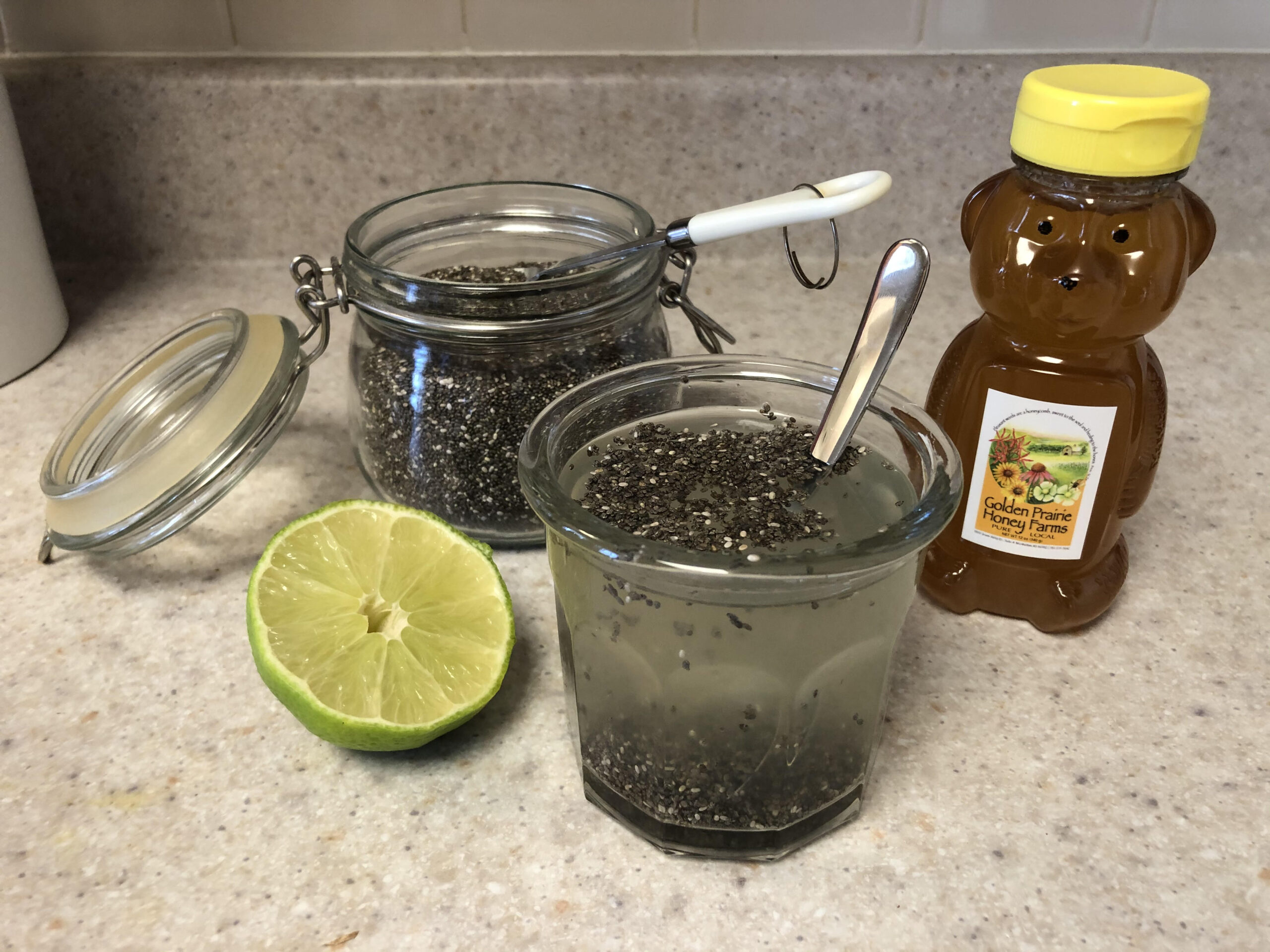
1 Cup of Water

2 Tablespoons of Chia Seeds

1 Tablespoon of Honey

Juice from ½ of a Lime

Putting it Together:

  1. Pour your water into the cup you will be drinking from. It doesn’t have to be exactly one cup, but I find this to be a good rough estimate.
  2. Add in the chia seeds, honey, and lime juice. As with the water, this is not an exact science, but these proportions are a good place to start. After you’ve tasted the drink a few times you can adjust based on your personal preferences.
  3. Stir everything together and leave it in the refrigerator for 3-5 hours (or overnight if you can!) The drink tastes better and, arguably, performs better cold and the chia seeds need time to dissolve in the water a bit.
  4. Enjoy your natural endurance booster!

How to use Chia Fresca

In Born to Run the Tarahumara people drink Iskiate before and during their long runs through the valleys and winding trails. I’ve found that this is a difficult drink to carry on a long run because the chia seeds get stuck in the lip of my water bottle.

I usually treat Chia Fresca as a natural pre-workout. As is the case with running gels or chews, I like to drink it about 20-30 minutes before my run so that there’s enough time for the energy from the chia seeds and honey to make it to my muscles.

Chia Fresca works best for me as a boost before 3-5 mile runs; about 20-40 minute runs. After the fourth or fifth mile I start to feel the energy wearing off. In an ideal world I would drink iskiate throughout my longer runs but, as I mentioned before, there are logistical issues I haven’t quite worked through.

You might be wondering why take the effort to make this drink when a running gel can do the same thing. For one, chia fresca is delicious and is simply more enjoyable than a gel. Perhaps more importantly, chia fresca is completely natural. Many running gels, while effective, are filled with ingredients that I can’t even begin to spell, let alone understand their effect on my body (Other than run faster, obviously). One popular gel I’ve used in the past contains maltodextrin, leucine, isoleucine, sodium benzoate, and potassium sorbate. Google has let me know that none of these substances are particularly harmful. But if the two supplements yield similar results, personally I prefer the one with four recognizable ingredients.

At the end of the day, chia fresca is worth trying if only for the novelty. I find it to be a helpful preparation for my runs and enjoy sweet and sour sensation from the honey and lime. It can be a great pick-me-up for when you aren’t quite feeling up to a run as well. But don’t take it from me, take it from the Tarahumara!

Have you tried chia fresca before? If you try the recipe let me know what you think in the comments and, if you have the time, definitely check out Born to Run!

What’s the Deal with Carbon-Plated Running Shoes?

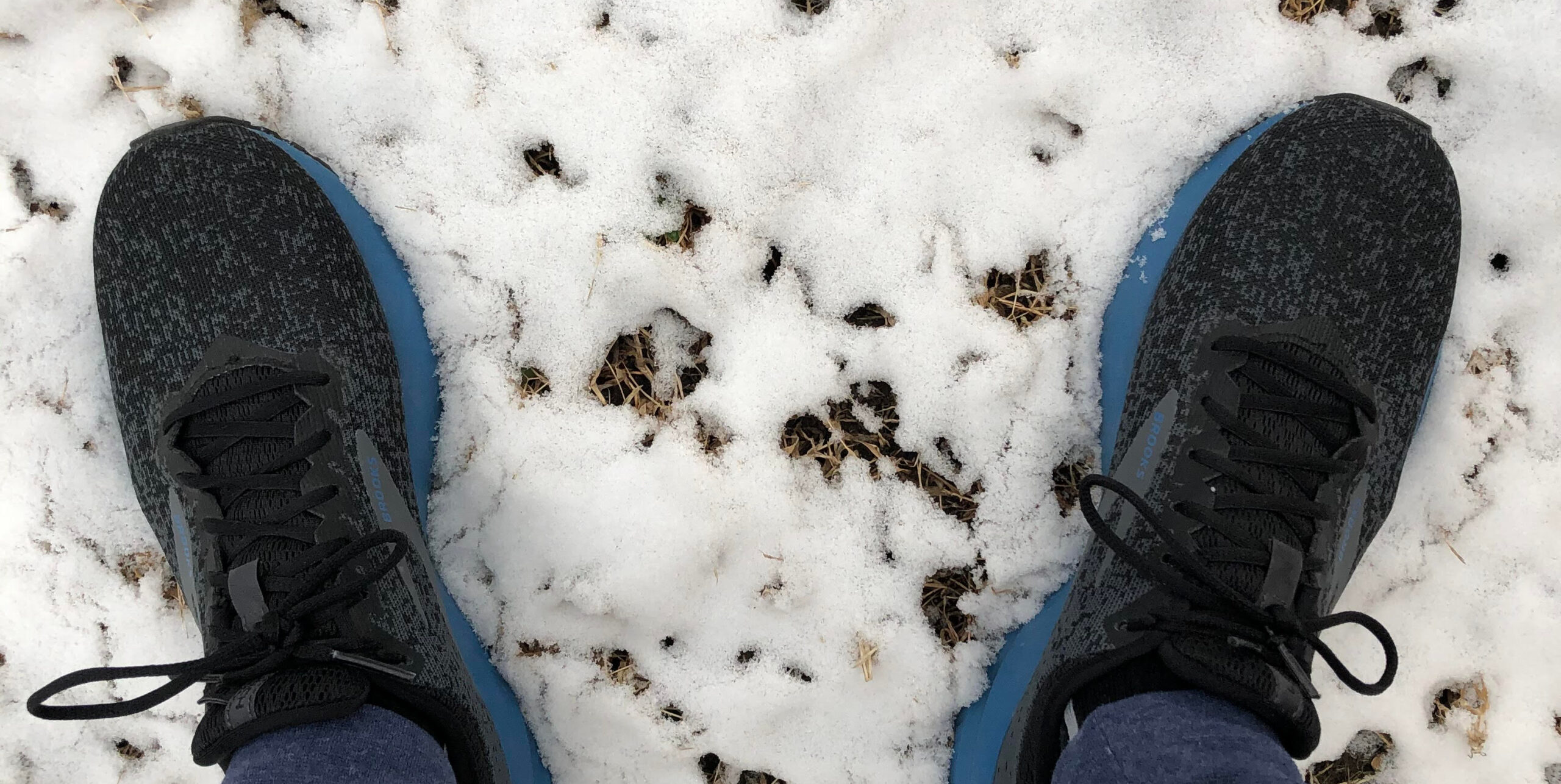
You’ve probably seen them, or at least heard about them. The Nike Vaporfly Next%. The Brooks Hyperion. The Hoka One One Carbon X. These carbon-plated running shoes are the fastest on the market and, for the last two years, have been worn by every record breaker in nearly every distance.

In 2019 Eliud Kipchoge became the first person to run a marathon in under two hours. He was wearing the Vaporfly Next%. Just a few months ago, Jim Walmsley broke the 100k American record. He was wearing the Carbon X 2.

The common thread among these record-breaking shoes is the carbon plate which runs through the sole of the shoe. In theory, the plate helps improve running economy (measured by the amount of oxygen your body can deliver to your muscles at a specific velocity), making runners’ strides and form more efficient. Nike’s Next% line advertises a 4% increase in output capacity. Other companies are not so specific, but still market their carbon-plated shoes as helping runners improve their speed.

While there have been skeptics of this approach, extensive testing and racing in the shoes have helped prove their efficacy. The idea behind the carbon plate is that it increases responsiveness in the foot strike, propelling the body forward so that you can go further in each stride with the same amount of force. But the net gain remains marginal. The 4% return is not an exact figure and, furthermore, faces problems in scaling. For example, someone who runs a ten-minute mile is not necessarily going to shave thirty seconds off simply by wearing a pair of these carbon-plated shoes. They might, however, improve their stride and, over time, decrease their mile time because of improved technique.

The benefits of carbon-plated running shoes are reaped mostly by the elite runners: those who stand the most to gain by a few seconds taken off a 10K, or a minute taken off a marathon. But of course, that hasn’t stopped everyone else from buying a pair of these shoes to try for themselves. When Nike released their Alphafly Next% model (the follow-up to the Vaporfly) they sold out online in just a matter of minutes.

The market is becoming increasingly saturated with carbon-plated shoes and it is likely that – if they haven’t already – they will become the standard for every race, from the marathon to the local 5K. Saucony has seen widespread success with their Endorphin line, which offers a carbon-plated racer as well as more affordable, slower, options. Sketchers has released its GOrun Speed Elite carbon-plated racer. Even the Atreyu Running Company has come out with its own budget option in The Artist.

The unfortunate thing about carbon-plated shoes, however, is the price. I cannot, in good conscience, recommend the average runner to sell their couch and purchase running shoes that average over $200 a pair. It can be easy to forget that elite runners often wear shoes provided to them by their sponsor. Eliud Kipchoge and Jim Walmsley are sponsored by Nike and Hoka One One respectively, which is why they always wear the latest models of shoes from those companies.

Mileage on these shoes is also a problem if you don’t have a good method to manage it. Carbon-plated shoes, built for high performance and speeds, have a lower lifespan than other types of shoes – around 100-150 miles. It’s possible that a consumer might go buy a pair of Vaporflys because of the hype, use them for every run, and ultimately wear them down without getting their proper use out of them.

In my opinion, the best use for carbon-plated shoes – if you choose to invest in a pair – is for racing and speedwork. Maybe do a little bit of tempo work so you can feel race-pace in your race shoes. This should last you about 1-2 training cycles, depending on the distance of the race. Run 50-75 miles in them during your train-up and then put the last 25 miles into them on race day.

Carbon-plated running shoes are cool and I can’t wait for them to become the industry standard as the market saturates and the price-point becomes more reasonable. Until carbon-plated shoes become more widely available at lower prices, we aren’t likely to see them at our local 5K and are probably best served by trusting the shoes we’ve been training in. Unfortunately, that doesn’t stop me from wanting a pair of the latest and greatest for myself!

Have you used carbon-plated shoes in training or racing? What was your experience? Was it worth investing in a new pair of shoes and would you recommend it to others?

If you liked this article, check out: How to Never Pay Full-Price for Running Shoes Again.

What Happens When You Don’t Run?

One of the most common questions among new runners is “how often should I run?” This question can be answered in several different ways depending on the athlete’s goals and current fitness level. As a rule, you should start out running fewer days a week (around three) and progress to running five or six days a week.

Another way to phrase this question is what happens to your body on days when you don’t run, and how often do you need to run to maintain or improve your current fitness level?

Depending on the workout – whether you hit the track for intervals or pounded pavement for two hours – your body takes different time periods to recover. For less intense workouts, you can often recover within 4-8 hours. For more intense workouts it might take a day or two for your muscles to fully recover. Once your body has recovered, however, it begins to slowly degrade, and you start to lose fitness.

“If you don’t run for several weeks, your body’s ability to store glycogen will drop and you will see negative effects across the board”

While you likely won’t feel many effects of this if you only miss a workout or two, when given time to build up the effects can seriously hinder any training plan. The first thing you will notice is a decrease in your VO2 Max and lactate threshold. After about 5-10 days of not running it will become much harder to maintain your speed over time. Your 5k times will plummet and your tempo runs will suffer. If you don’t run for several weeks, your body’s ability to store glycogen will drop and you will see negative effects across the board.

In the same way that the frequency of training needed to see improvement depends on a runner’s individual level of fitness, the negative effects of not running are not distributed equally across the diverse strata of athletes. Elite runners need to run more often than average or beginner runners to continue improving because their bodies are already finely tuned and optimized for performance. At a high level, every difference in performance is more noticeable; the more fit a person is, the more sensitive that person’s body is to change. While taking a full day of rest between each workout will not negatively affect most average runners and, in fact, is recommended for those just starting out, it would be detrimental to a more advanced runner who normally trains six days a week.

As you progress as a runner you should slowly add more workouts into your schedule. This does not mean running as hard as you can every day, but, rather, replacing rest days with active recovery days. Instead of taking the day off to rest your muscles go for a slow, easy run. These types of workouts are often at a much slower pace than you usually run at. While you might typically run several miles at an 8:00 min/mile pace comfortably, your recovery runs might be at a 9:30 pace. Active recovery is often preferred to strictly rest days because it allows your blood to keep flowing more efficiently and helps your body flush lactic acids and toxins more quickly than simply not running. That said, perhaps the biggest challenge on active recovery days is to maintain a slow, even pace. Don’t speed up just because you feel good. Your body will thank you.

At the end of the day, you probably don’t need to worry too much about your fitness degrading if you already have a set routine and are running consistently. I’ve posted previously about the importance of consistency in running as well as some ways to help make running a habit. Unless you’re an elite runner with a strict, tailored training program, your biggest stumbling block to avoid with frequency is simply taking too many days off. It is incredibly easy to take one day off and, before you realize it, one day has turned into one week and every day you don’t run makes it harder to get back into the rhythm. Limit your rest to one or two days. Your body will thank you.

What has been your experience with taking time off? How many days a week do you typically run and how has your training frequency impacted your performance?

If you liked this article, check out: A Few Thoughts on Consistency in Running.

When the Weather Gets Rough: Running Inside

Let’s get one thing straight: I firmly believe that running outside is superior to running inside, especially when running inside means running on a treadmill. Running outside on a track, a trail, or pavement is better in nearly all aspects, from maintaining form to reducing impact and stress on joints. But let’s get another thing straight: running at all is better than not running and there are some days when running outside just isn’t realistic for most people.

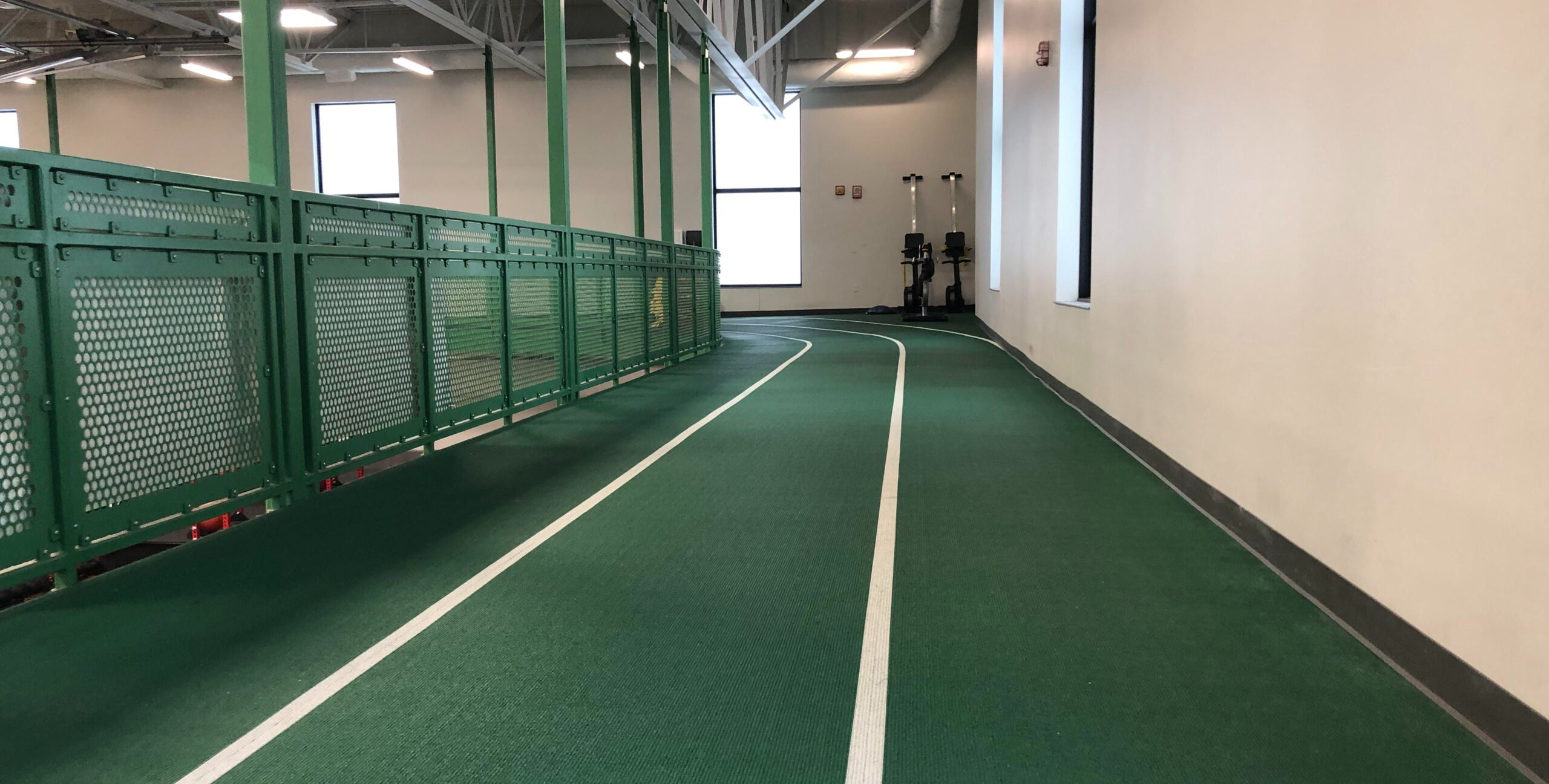
This morning I woke up to a consistent downpour of snow and 6-degree Fahrenheit weather. I had previously planned to go for a thirty-minute, low heartrate jog outside, but as I looked out my window at my newly white-coated lawn I just wasn’t feeling up to fighting the weather. So, I hopped in my car and drove to my local gym, which happens to maintain an indoor track. Sometimes there are days you just can’t run outside.

Of course, it wouldn’t have been impossible to run outside. With the proper gear and the right headspace, you can run in nearly every condition. But realistically, for most non-elite runners it just isn’t easy to get motivated to run in extremely sub-optimal conditions. While I pride myself on being able to run in all weather, there will always be days where the weather beats down my motivation and I struggle to get out the door into the snow (or heat, or rain…).

But as I mentioned before, while it is rarely ideal to run inside, getting a run in on a treadmill or an indoor track is exponentially better than just not running. When you choose not to run because of the weather, you are breaking with your established pattern of exercise. As I’ve written before, it is important for running to become a habit. I believe indoor running provides a valuable exception to the rule which can help people stay on-track (pun intended) with their training plans.

So why is running indoors less ideal? One simple reason is that when you run outside you usually have scenery which can both motivate you or, at least, take your mind off the pain your body is feeling long enough for you to grind through the tough parts of your workout. Running on a treadmill can become mundane after a few minutes. While this can be mitigated by watching Netflix or other entertainment during workouts, I have found that the beauty in the outdoors trumps any television show. Besides, aren’t you already inside for most of the day anyway?

Another reason why running outside is preferable is because you have a lot more freedom to choose your surface. While running on an indoor track doesn’t necessarily have adverse effects on impact, running on a treadmill can be deceiving. Most treadmills are designed to reduce and absorb impact, but push runners to shorten their stride, which encourages confusing inputs when translating treadmill training to outdoor running. In short, runners who train mostly on treadmills struggle to perform when running outside or on a track.

When you run on an indoor track, often your device has trouble connecting properly through the walls and ceiling of the building.

Finally, there is the logistical challenge of tracking your runs inside. Most watches and apps connect via satellite to track your location when you run and to provide data on distance and pace. When you run on an indoor track, often your device has trouble connecting properly through the walls and ceiling of the building. This is why you may sometimes notice your pace is between 30-60 seconds slower than it should be. Running on a treadmill hosts another set of problems for tracking performance due to the fact that you are running in place. While some devices have treadmill settings, the accuracy of these is often questionable. You could take the data the treadmill itself outputs and transcribe it into whichever app you use to track your runs, but that’s an extra step that I, for one, would prefer to skip.


Running indoors certainly has its place, but it is rarely a good substitute for pounding the pavement outside. That said, if the weather just won’t cooperate, sometimes it is the only option. Whether you choose to run inside or outside, the important part is just getting out and getting time on feet. Running will always trump not running, so don’t let the freezing cold or the scorching heat keep you from getting your workout in!

How has extreme weather forced you to adapt your training plan? When you run inside, what kinds of workouts do you do? Do you have access to a gym that maintains an indoor track? How do you stay motivated when the weather tries to beat you down?

If you liked this article, check out: What Happens When You Don’t Run.

Make Running a Habit (Not a Chore)

Last week I watched a video from one of my favorite running YouTubers, Kofuzi, in which he discussed tips for people who either want to start running for the first time or used to be runners and are looking to get back into it. I thought his whole video would be helpful for people who are struggling to get into running, but his emphasis to make running a habit stood out to me as the key piece of the equation.

I watched Kofuzi’s video the day after I posted a blog about the importance of consistency, in which I said just getting out and getting a run in – even if it’s not the perfect workout – is better than not running at all. This is an important contributing factor to the overarching idea of forming a running habit.

When you’re starting out as a runner, just the process of making running a habit can be a struggle. In these first few weeks the quality of your workout doesn’t matter as much as just getting out and running. Depending on your fitness level, this might not mean running the entire time. It’s okay to mix running and walking, the important thing is that you’re getting outside and forming the pattern so that the next time it’s a little bit easier to turn the doorknob and get into your workout.

Another point I want to draw out is that this applies for longtime runners who are coming back to the sport after some time off. I’m currently in the middle of a return to running after having Covid-19. One of the things I’ve been reflecting on is my need to make running a habit again. This is something where I feel like people who identify themselves as runners can almost have a sense of shame in thinking that they shouldn’t struggle to get back into the pattern of running five or six days a week because they’re already runners. While this is understandable – and I’ve experienced it myself – it defies the science of habit formation.

Charles Duhigg writes in his book, The Power of Habit, that habits are formed in a loop consisting of a cue, a routine, and a reward. A cue is what instigates the action. Many runners who have already formed the habit of running describe this as a sense of itching for a workout. Some people have imposed cues on themselves such as their alarm in the morning. The routine is the actual act of running. Finally, a reward is what reminds you why you did that routine to begin with. Oftentimes this is the dopamine released during exercise. For some people, having a post-run shake or recovery drink creates the reward aspect.

While the cue and the reward are important aspects of habit formation, it is important not to become too caught up in the specifics. The key piece of making running a habit is to run. Turning the doorknob and getting outside, regardless of the workout, is more important than any alarm or recovery drink. Remember, you can’t have a reward without the routine and, likewise, cues fall short without a following action.

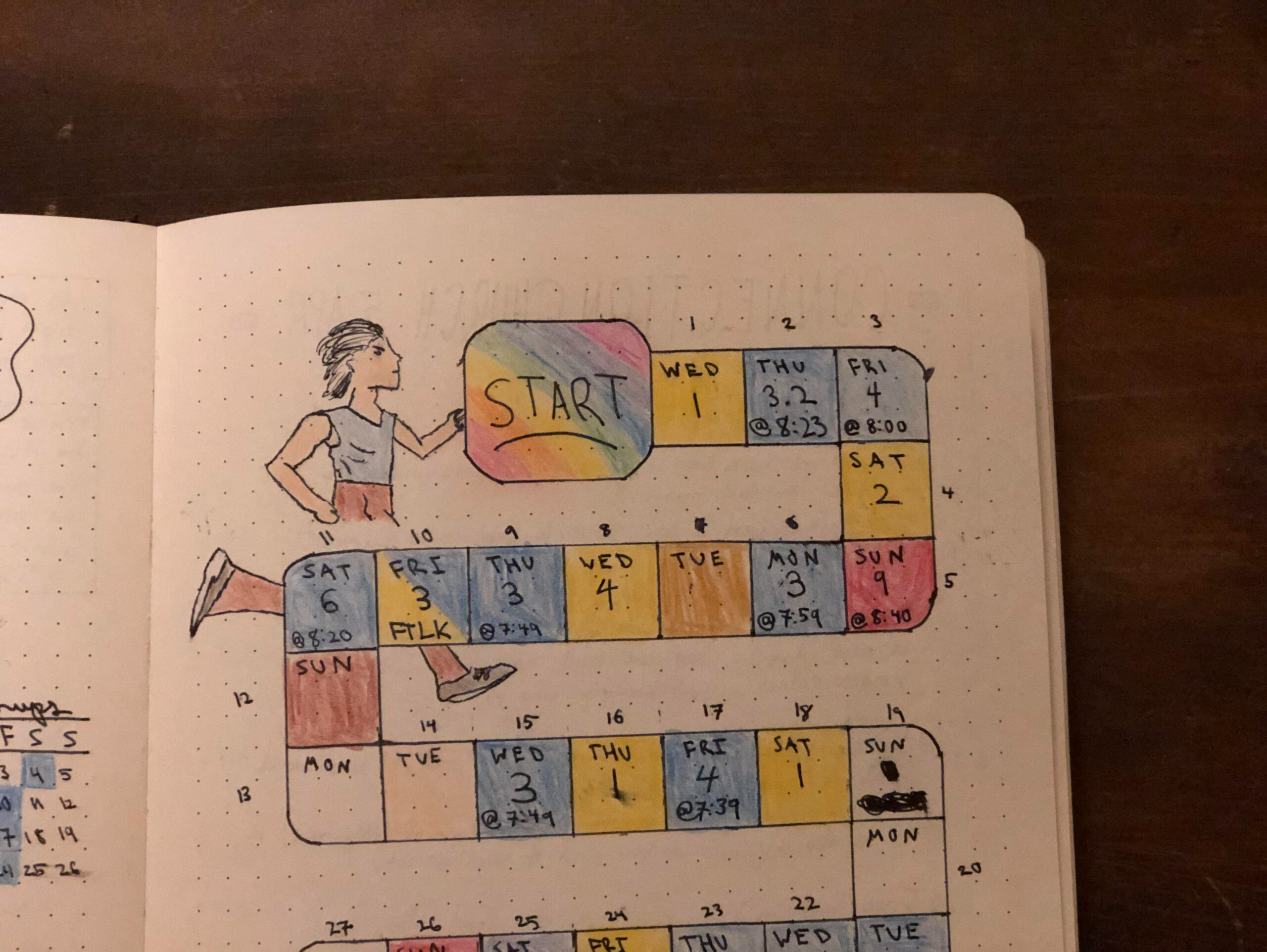
At the end of the day, don’t worry too much about the finer points for a while. If you’re trying to get into running (or get back into running), just focus on getting a few runs in this week. Before you can really dive into a training plan, turn running into a habit. If you got three runs in last week, try to get four this week. Don’t get discouraged if it takes a while for things to get easier, it can often take up to six weeks for a habit to truly take hold. As it becomes easier to get out the door and run, you can start paying more attention to pace and distance. If you start slow and focus on just integrating running into your day in whatever capacity is possible for you, you will soon start developing a baseline and be able to start training more specifically.

How has your running journey been recently? Have you struggled to get out the door and run consistently? What are some ways you have found to turn running into a habit, and were they effective?

If you liked this article, check out: Consistency in Running: Accountability Matters.