What happens when the NFL meets Track and Field?

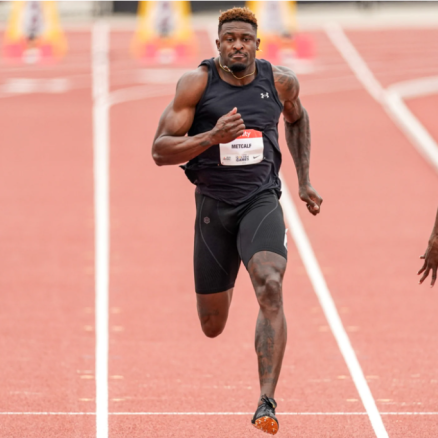
Under normal circumstances, the USA Track and Field (USATF) Golden Games would go relatively unnoticed by most people. Despite being a high-level event for the sport, viewership is often limited to those actively participating in Track and Field. Last weekend, however, an unprecedented number of people tuned in to watch the men’s 100m race. Why? It wasn’t because some of America’s fastest men were racing. Rather, people wanted to see if Seattle Seahawks wide receiver, DK Metcalf, could qualify for the Olympic Trials.

Last year in a game against the Arizona Cardinals DK Metcalf took the internet by storm after running 115 yards to chase down Budda Baker after an interception, during which he reached a top speed of 22.68 MPH. Afterward, it was calculated that if Metcalf ran this speed for a full 100m he would finish in 9.88 seconds. Of course, there are quite a few variables at play, including on one hand the fact that he was able to accelerate this quickly wearing football equipment and, on the other hand, the fact that in a track meet he would start from a block.

If you don’t follow track and field religiously, the Olympic Trials qualifying time for the 100m is 10.05 seconds. To put it in perspective, only around a hundred American men have ever run that fast. Only fifteen men – professional track athletes – have run fast enough to automatically qualify for this year’s Olympic Trials. There are 32 slots for the 100m at this year’s trials, so the remaining 17 will be filled with the next fastest men. NBC Sports estimated that in order to make it into the trials, Metcalf would have to run at least a 10.2. This would, ideally, put him close enough to be able to squeeze into the field of athletes. 

After all of the speculation, the predictions, trash talk, and encouragement, Metcalf finished 15th overall with a time of 10.37. This was not, unfortunately, fast enough for him to qualify for the Olympic Trials. But it was still an incredibly impressive performance. The critics want to emphasize that football speed is not track speed and that’s not wrong. DK didn’t necessarily prove that he has track speed, but he did make the statement that he has the potential for some serious times.

Track athletes train year-round in order to maintain and improve on their peak performance. Metcalf hasn’t said publicly how much he trained for the 100m event, but between the end of the NFL season and the Golden Games he only had a few months to train specifically for track. Some have interpreted DK’s appearance in the 100m as an arrogant affront to serious, professional runners. But, in fairness, it was USATF who tweeted at Metcalf in response to his 115-yard pursuit of Budda Baker. He has also approached the race with relative quietness and humility on social media. Much more was said about DK Metcalf than was said by DK Metcalf.

In hindsight, it’s easy to see how it was unrealistic for a star NFL wide receiver – even one of the fastest in the league – to qualify for the Olympic Trials in his first track meet since high school. Metcalf could eventually become competitive for the trials, should he decide to pursue that route. In addition to his relative lack of preparation, it should be noted that DK is about fifty pounds heavier than the professional runners he was competing against. If he slimmed down, focused exclusively on track, and improved his kick for the last 15-20 meters he would likely be able to throw down a sub-10.2 and, potentially, chase down that 10.05 qualifying time. We already know he possesses an incredible work ethic and competitive mentality.

The idea of NFL players representing the United States in track and field at the Olympics is neither new nor unreasonable. Many football players competed in track and field events in high school – including over 60% of players in the 2019 NFL draft. In fact, there have been 36 track and field Olympians who were formerly NFL football players.

Aside from bringing new, talented athletes into the sport, having NFL players compete in track and field events is beneficial because it has the potential to bring new viewership to the sport. A common discourse in the running world is how we bring more spectators to a sport that is, historically, considered pretty boring to watch. One of the things that make the NFL so enjoyable to follow is the plethora of players that fans follow from one season to the next. While many fans have their favorite team, many also have favorite players who they enjoy seeing perform well even after they’ve been traded to a new team. Many fans tuned into the Golden Games last weekend to watch DK Metcalf run. There have been talks of Tyreek Hill running in the future. If NFL players transition to track, they will bring in some element of their fan base as well as more attention to the sport. Imagine if fans followed Fred Kerley or Ronnie Baker the way they follow Patrick Mahomes or Rob Gronkowski.

Track and Field, and running in general, deserves to be watched more than every four years when the Olympics happen. This can happen first by increasing awareness of the USATF schedule. It’s difficult to follow a sport if you don’t know when the events are happening. Second, more races and meets need to be broadcasted and people need to know how they can watch them. Before watching running can become more popular, it must become more accessible.

What did you think of DK Metcalf’s 100m race? Do you think we’ll see him race again before the June cutoff for Olympic trials? Leave a comment below to let us know what you think about NFL players competing in track and field.

If you liked this article, check out: 50k is the New Marathon.
Workout Wednesdays #10

Welcome to Workout Wednesdays! This column is a set of shorter blogs targeted specifically towards providing newer runners with a tangible place to start running beyond just going out to jog a few miles. I usually do these workouts on Wednesdays, but you can incorporate them into your schedule wherever it makes sense. I also recommend consuming some sort of nutrition before your workouts – my default is a cold glass of Chia Fresca. If you have a go-to workout that you run regularly and want to share with other readers, please reach out through our contact page to be featured in a future Workout Wednesday.

You may have noticed if you’ve been following the blog for a while, that I lean towards distance running in a lot of what I write about. Today’s workout is no deviation from that trend (though shorter distance runners can still benefit!). The key to these 800s is to keep them consistent. If your goal is to run a 3:30 marathon then run at an 8:00 minute pace, don’t try to dip below that. Your money is made on the last few iterations: keep your pace steady and ensure you are following a 1:1 rest cycle (rest for the same amount of time it takes to run) after each 800. This workout is best positioned towards the end of a training cycle and is a great way to experience what race pace should feel like without actually getting out and running a full marathon.

The Workout:

1-2 mile warmup

10 x 800m @ marathon pace

1-2 mile cooldown

Now that you’re finished, go down a delicious recovery drink and definitely do not forget to stretch!

Let us know how the workout went and how we can improve in the comments below. Was anything about the workout unclear? If you have a workout you want to share reach out via our contact page and don’t forget to follow the blog to get these delivered straight to your inbox.

If you enjoyed this workout, check out: Workout Wednesdays #2.

Crafting Good Goals as a Performance Multiplier in Running

If you look at my Strava log, you’ll see that I didn’t get off to a great start at the beginning of 2021. There are a few reasons for this, such as contracting Covid-19 and sub-zero temperatures, but in retrospect it boils down to a lack of well-defined goals. Consistency is key to progress and motivation is key to consistency, but it’s hard to stay motivated without being focused on what you want to accomplish.

I did, of course, set goals for 2021. But I set general goals, such as “Run a faster marathon in October” and “Run a sub-19 minute 5k by the end of the year.” Not that these aren’t good goals to have, but October and December 31st are relatively far off. I didn’t have a game plan for how to achieve this beyond train hard and train smart every day.

Recently, a group of people I work with decided to run a hundred miles by the end of June. As a competitive person, I instantly decided I wanted to be the first to hit a hundred miles. I do, after all, manage a running blog. Immediately, my mileage ramped up. I got back on track running six days a week – my ideal training schedule, but one I haven’t maintained faithfully since my last marathon in October. I ended up hitting a hundred miles in thirty days, becoming the first of our group to do so. 

The reason why I was able to kick it into gear and make a mental and physical shift in training is that I had a good goal in mind. There’s a lot of academic literature on goal-setting, but it boils down to about five things: A good goal should be specific, measureable, attainable, realistic, and time-based. Psychologists use the acronym SMART.

When thinking about setting goals, it’s important to be specific. While running a faster marathon is good, it isn’t specific enough to be an actionable goal. My current marathon PR is 3:38, so a specific goal would be something along the lines of running a 3:30 marathon. Even better would be selecting the race I want to run as well. The line between the specific and measurable aspects of goal setting sometimes blurs, but hashing it out even more I could say that my goal is to run sub-3:30 at the Poznan Marathon, which comes out to an 8:00 average mile, and I want to attempt to run splits according to a 10-10-6 racing strategy. 

Side note: if you are unfamiliar with the 10-10-6 marathon racing strategy, essentially you start with your goal pace and run the first ten miles slower than your goal pace – about 8:05-8:10. For the next ten miles you run at your goal pace. Finally, for the last six miles (the real “racing” portion of a marathon) you run below your goal pace – fast enough to bring your average down, but not so fast that you burn out.

This goal is measurable because I now have the ability to, well, measure clearly whether I met my goal or not. After the race I can analyze both aspects of my goal – whether I ran sub-3:30 and whether or not my splits were divided correctly. This also allows me to train more specifically. How can you train at “race pace” if you don’t know exactly what race pace is? Additionally, understanding the splits breakdown can help me focus on specific skills, such as running faster at the end of a long run.

One area a lot of people struggle with when it comes to setting good goals is in making them attainable. This is also where it is important to distinguish between long term goals and short term goals. My long term goal is to qualify for and run the Boston Marathon. The qualifying time for my age group is 3:00, but because there are only a select number of slots you usually have to run a few minutes faster than that to give yourself a buffer. While I would love to go out and run a 2:55 in October, given that my current PR is 3:38, a ~45 minute time drop isn’t necessarily attainable. Running sub-3:30 in October is, however, attainable. Over the next few years I can set interim goals, getting faster each race, such that eventually running 2:55 is attainable. But trying to run that fast now would only be discouraging when I didn’t meet my goal in October.

When trying to craft good goals, you must be realistic. While qualifying for the Boston Marathon is, eventually, realistic, qualifying for the Olympics probably isn’t (but fingers crossed?). Additionally, a goal might not be realistic for the specific time in your life as well. For example, if you work all day, getting up early and coming home late, it might not be realistic for you to train for a marathon. A more realistic goal might be to train for a half marathon, which requires significantly less time, and planning to run a marathon later on when your situation changes. This is also the battle for runners who live in places where the temperature drops below zero frequently. It may not be realistic to train for a marathon when you can only run on a treadmill. 20 mile training runs are tough even without adding in the monotony of the treadmill. It may be more realistic to train for a fall marathon, when the weather outside is more conducive to proper training.

Finally, when setting goals you should consider the time you have to complete them. Timelines are important because they help you stay on track. Marathon training blocks are often around three months long, so if I am planning to run a marathon in October, then I know I need to start my training block around the beginning of July. Before then, I can focus on building a strong cardiovascular base, which will sustain me throughout my training block. The converse is true as well, if you haven’t been training specifically for a marathon then it doesn’t make sense to try to run a PR in a month.

At the end of the day, you might be able to make progress without crafting good goals, but you won’t get quite as far as you would otherwise. It helps to write your goals out, as specifically as possible, in your training log or on a notecard you can put somewhere you see every day. If you find yourself lacking in motivation or not really seeing the improvement you’d like to see, take a moment to evaluate whether you have specific goals that can be measured and attained within a given time period. If not, then you know where to start!

How have you tracked goals in the past? Do you have a specific goal-setting ritual that helps you carve out a specific goal? Leave a comment to let us know how you go about setting goals and how you stay on track pursuing them.

If you liked this article you should check out: What Happens When You Don’t Run?

Elongated Hill Repeats: Workout Wednesdays #9

Welcome to Workout Wednesdays! This column is a set of shorter blogs targeted specifically towards providing newer runners with a tangible place to start running beyond just going out to jog a few miles. I usually do these workouts on Wednesdays, but you can incorporate them into your schedule wherever it makes sense. I also recommend consuming some sort of nutrition before your workouts – my default is a cold glass of Chia Fresca. If you have a go-to workout that you run regularly and want to share with other readers, please reach out through our contact page to be featured in a future Workout Wednesday.

This workout is another great hill workout. It’s a bit longer and focused more on building endurance than traditional hill sprints, but can be implemented into any training plan. Don’t worry about pace on these elongated hill repeats, but rather try to keep to a 6-7 relative effort. It’s important that you don’t burn out on the first half of the incline, so start slower than you think you need to. Take the jogs down slow, but don’t walk or stop, it should be a fairly continuous five miles up and down. I usually leave a water bottle at the top to replenish myself between iterations.

The Workout:

1-2 mile warmup

5 x 1/2 mile incline (easy jog down in between efforts)

1-2 mile cooldown

Now that you’re finished, go down a delicious recovery drink and definitely do not forget to stretch!

Let us know how the workout went and how we can improve in the comments below. Was anything about the workout unclear? If you have a workout you want to share reach out via our contact page and don’t forget to follow the blog to get these delivered straight to your inbox.

If you enjoyed this workout, check out: Workout Wednesdays #4.

Mile Repeats: Workout Wednesdays #8

Welcome to Workout Wednesdays! This column is a set of shorter blogs targeted specifically towards providing newer runners with a tangible place to start running beyond just going out to jog a few miles. I usually do these workouts on Wednesdays, but you can incorporate them into your schedule wherever it makes sense. I also recommend consuming some sort of nutrition before your workouts – my default is a cold glass of Chia Fresca. If you have a go-to workout that you run regularly and want to share with other readers, please reach out through our contact page to be featured in a future Workout Wednesday.

Today’s workout is another classic: mile repeats! Nothing fancy about them, but if you’ve never done repeats before the idea is just that you run multiple iterations of the same distance. Rest cycle is a little less than 1:1, so if you run your miles at 6:00 take about 4-5 minutes of rest. They are prescribed here to be at 5K pace, but it’s okay if you’re not quite hitting that, just be sure to keep the times consistent. Don’t go out and run a crazy fast time on the first mile if you can’t do it on the last mile.

The Workout:

1-2 mile warmup

4-6 x 1 mile @ 5K pace

1-2 mile cooldown

Now that you’re finished, go down a delicious recovery drink and definitely do not forget to stretch!

Let us know how the workout went and how we can improve in the comments below. Was anything about the workout unclear? If you have a workout you want to share reach out via our contact page and don’t forget to follow the blog to get these delivered straight to your inbox.

If you enjoyed those mile repeats, check out: Workout Wednesdays #6.

50K is the New Marathon

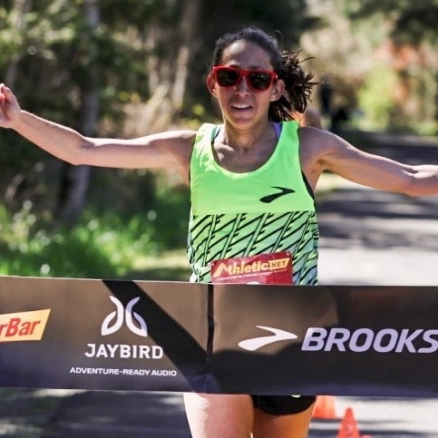
In a moment last week unlike any other in this new age of running, we experienced something truly awe-inspiring and inherently motivating. We already knew Desiree Linden was a beast. For the uninitiated, Linden’s resume includes two stints representing the United States at the Olympics (2012 and 2016). In 2018 she became the first American woman to win the Boston Marathon in 33 years. Last February, she came 11 seconds away from making her third straight Olympic team in a field of runners saturated with talent, both new and old.

In the wake of the Olympic trials – and 2020 in general – Des Linden set her sights on a longer distance: the 50k. A few months ago she announced she would be racing the distance and attempting to break the standing world record of 3:07:20. On April 13th, 2021 she not only destroyed the previous record but became the first woman to run a sub-3 hour 50k with a time of 2:59:54.

The 50k is the shortest distance officially considered an ultramarathon. Technically, anything beyond the official marathon distance of 26.2 miles would be an ultramarathon, but it is generally accepted that 50k – or 31.1 miles – is the baseline. It was previously the case that the marathon was this somewhat unattainable distance that people considered a bucket-list event. While it is true that the marathon remains an impressive feat, the popularity of the distance has increased to the point that it is no longer out of reach for most people. Over 500,000 people run marathons every year in the United States. At this point, the likelihood of you knowing someone who has run 26.2 miles is higher than ever. Of course, if you have a lot of runner friends this likelihood goes up exponentially.

Born to Run author Christopher McDougal astutely observed that when times get tough people turn to running. Over the course of modern American history there have been three waves in which participation in running increased: during the Great Depression, the Vietnam War era, and directly after the 9/11 terrorist attacks. It stands to both reason and observation that the Covid-19 pandemic has had a similar effect on people.

In fact, the drought of races in 2020 created a necessity for people to come up with their own ways to compete. We saw runners across the country smashing Fastest Known Times (FKTs), people completed entire marathons in laps around their house, and many athletes joined Des Linden in running Destober – running the number of miles every day that corresponds to the calendar date for the month of October.

When asked to comment on her upcoming 50k race, Des replied that the road 50k is the new marathon – and there is a lot of evidence to support this. In terms of popularity, the marathon is becoming more and more commonplace. As I mentioned earlier, the distance is losing its allure as an unobtainable feat of human accomplishment. There appears to be a sweet spot where a race is completed infrequently enough to maintain its mystique, but not so frequently that it fades from the spotlight. For example, the 100 mile footrace is incredibly grueling but completed by so few people that not many non-runners are even aware of it. The 50k, on the other hand, is slowly starting to creep from an obscure ultra event into the mainstream.

Times are getting faster as well. Part of the reason why ultras are in a different category is because they are simply too long to maintain a reasonably fast pace throughout. But Des ran her 50k at a 5:47 pace, just seconds slower than her marathon PR and knocking a full seven minutes off the standing world record. She proved several points last Tuesday. First, she demonstrated that a woman could crush the 3 hour barrier. More importantly, perhaps, she showed that you can run 31.1 miles at a pace similar to marathon pace, meaning that her aerobic threshold and cardiovascular capacity could last longer than is generally understood. The 50k can be a fast race too.

Linden is changing the game for American distance runners and for the ultra world as a whole. She, among others, has inspired others to run longer and farther than they thought possible. She showed that longer distances can be fast too. And she set a new bar for American runners.

While Americans have not been dominant in the marathon for decades (though that is a discussion for another day), the 50k provides an opportunity for Americans to excel. Top female, American marathoners often put up personal bests between 2:19 and 2:21 and oftentimes they skew towards the slower end of this spectrum. While this is insanely impressive, in the age of carbon-plated shoes and highly dialed in training marathons are often won in the 2:17-2:18 range. And American men are not off the hook either. While there were seven men at The Marathon Project in December who ran in the 2:09 range (and one 2:08), marathons are won in the 2:02-2:05 range.

I think elite marathoners like Sara Hall and Noah Droddy are on the right track and a lot of the progress in the last two years is certainly due to the rising popularity of the distance. American marathoning will be great again. But in the meantime, some of these elite distance runners should try their hand – or, foot – at the 50k. While Des Linden is, by all means, an excellent marathoner, she isn’t the top dog at the distance. It’s unlikely that she will win another marathon major. But she has a reputation for toughness and it’s that grit, combined with wicked speed, that makes her the fastest woman in the world in the 50k. By seven minutes.

As the popularity of the race grows and becomes more prevalent in the mainstream, more elite marathoners should transition to racing road 50ks. Athletes known for their toughness have an opportunity to dominate a sphere of running that is relatively untouched and unexplored. By nature of the ultra community most 50ks are run on trails. But as the sport evolves and athletes push the limit of what’s humanly possible the road 50k can become an established norm.

The 50k will never truly replace the marathon. It doesn’t have the same aura or backstory and it’s not as accessible for most runners. But for athletes looking to stretch the boundaries of the sport, both at the elite and the sub-elite level, the 50k is an opportunity to break new ground. We will continue to see new world records and it is not unreasonable to think that in 5-10 years there will be a 50k majors circuit. At the sub-elite level, we will see more road 50ks across the country. We will begin to see 50k stickers replace 26.2 stickers on car windows and more running stores will cater to ultramarathoners. By 2030, you won’t be bragging to your friends about the marathon you just ran, but rather about the 50k you completed last weekend.

What did you think about Des Linden’s groundbreaking 50k race? Leave a comment down below to let us know what you think about the 50k versus the marathon. Do you agree that the future is further?

If you liked this article, check out: Why I Lift Weights as a Runner.

Workout Wednesdays #7

Welcome to Workout Wednesdays! This column is a set of shorter blogs targeted specifically towards providing newer runners with a tangible place to start running beyond just going out to jog a few miles. I usually do these workouts on Wednesdays, but you can incorporate them into your schedule wherever it makes sense. I also recommend consuming some sort of nutrition before your workouts – my default is a cold glass of Chia Fresca. If you have a go-to workout that you run regularly and want to share with other readers, please reach out through our contact page to be featured in a future Workout Wednesday.

Today’s workout is a simple but tough interval ladder workout. Essentially you will build up distance throughout the workout and then come back down. Focus on maintaining consistent effort, though your pace will fluctuate based on which distance you are running. Rest cycle is 1:1, which means that you should take as much rest as it took you to run the previous interval. The only exception is with the 1,600m, which you should only rest for about the same as your 800m iterations.

The Workout:

1-2 mile warmup

2 x 400m

2 x 800m

1 x 1,600m

2 x 800m

2 x 400m

1-2 mile cooldown

Now that you’re finished, go down a delicious recovery drink and definitely do not forget to stretch!

Let us know how the workout went and how we can improve in the comments below. Was anything about the workout unclear? If you have a workout you want to share reach out via our contact page and don’t forget to follow the blog to get these delivered straight to your inbox.

Workout Wednesdays #6

Welcome to the sixth of (hopefully) many Workout Wednesdays. The goal of this column is to create a set of shorter blogs targeted specifically towards providing newer runners with a tangible place to start running beyond just going out to jog a few miles. I do my speed workouts on Wednesday, which is why it made perfect sense to post these workouts in the middle of the week. I find it to be an ideal time a few days after my Monday tempo run and before my Saturday long run, but you can incorporate this into your plan wherever it makes sense. I recommend consuming some sort of nutrition before your workouts – my default is a cold glass of Chia Fresca. If you have a go-to workout that you run regularly and want to share with other readers, please reach out through our contact page to be featured in a future Workout Wednesday.

This is a classic track & field workout that you may already be familiar with. The workout is ideally performed on a track, but can be done on any small loop or be modified so long as there is a stretch of road or trail that is suitable. Crossovers are fairly simple, but in case you are not familiar with the concept, run your 200m sprint from one corner of the track to the other and then walk back to where you started through the middle of the track (about half the distance you just ran). As soon as you get back to the start, begin the next sprint!

The Workout:

1-2 miles warmup

12-15 x 200m crossovers

1-2 miles cool down

Now that you’re finished, go down a delicious recovery drink and definitely do not forget to stretch!

Let us know how the workout went and how we can improve in the comments below. Was anything about the workout unclear? If you have a workout you want to share reach out via our contact page and don’t forget to follow the blog to get these delivered straight to your inbox.

Building Your Running Shoe Rotation

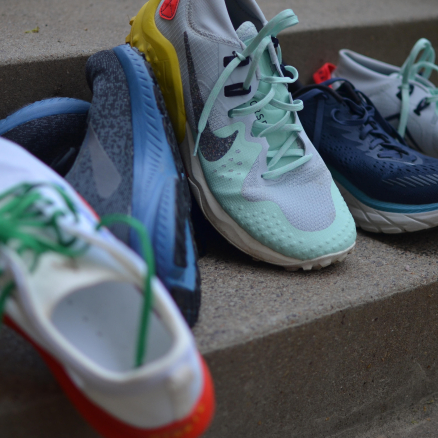
You’ve probably heard it before if you’ve been reading the blog for a while, but most runners have more than one pair of shoes. In fact, building your running shoe rotation is one of the most important elements of higher-level running. There are a few reasons for this, but mostly it comes down to the simple fact that different shoes are manufactured for different purposes. Perhaps the most drastic example of this is that you would never wear a spiked track shoe on a trail run and, similarly, you wouldn’t wear a trail shoe on the track.

Of course, this creates both confusion and controversy. Not all runners can afford multiple pairs of shoes and not everyone necessarily subscribes to the idea that you should change out your shoes. But, most importantly, many new runners don’t know how to build a sustainable shoe rotation because they don’t understand how to use different types of running shoes in training. Additionally, the market is saturated to the point that it can be incredibly difficult to distinguish between types of shoes without some sort of help.

There are more ways to structure your shoe rotation than there are iterations of the Nike Pegasus, but there are a few basics to consider when building out your own selection of shoes. The idea is to use the right shoe for the workout, but to do so you must first understand how shoe companies break down the different styles of running shoe.

The Everyday Trainer

This shoe is the most common among runners. The everyday trainer is designed to be a versatile, “do-everything” shoe that you can use regardless of the weather, terrain, or workout. These are low-specialization shoes that will work with minimal thought. You can throw a pair of these in your suitcase and still be equipped to execute every workout on the schedule without sacrificing much in the way of performance.

The everyday trainer can be further broken down into lightweight, regular, and max-cushioned trainers. This is because some runners prefer a more padded approach, generally, and other runners want a slimmed down experience. I personally keep both a lightweight and regular trainer in my rotation, which I swap depending on how my knees are feeling. Everyday trainers are great for “garbage miles” and runs that don’t necessarily have a specific purpose. I usually run in some sort of daily trainer in between my speed workouts and my long run days.

Regular Daily Trainers: Brooks Ghost, Saucony Ride, HOKA ONE ONE Clifton

Lightweight Trainers: Brooks Launch, Saucony Kinvara, HOKA ONE ONE Rincon

Max-cushioned Trainers: Brooks Glycerin, Saucony Triumph, HOKA ONE ONE Bondi

The Performance Trainer

The performance trainer is a shoe designed to strike a balance between race-level performance and training-level durability. These shoes can take more miles than a racing flat, but offer a more tailored experience than the daily trainer. They are lighter and usually offer a bit more traction. Performance trainers are great for tempo days, threshold workouts, speed days, and of course your long runs. While you can certainly progress and see improvements doing these workouts in a daily trainer, wearing a performance trainer is more efficient.

Performance Trainers: Brooks Hyperion Tempo, Saucony Endorphin Speed, Nike Pegasus Turbo

The Racing Flat

Finally, it’s time to race! Racing flats are the ultimate evolution of running shoe. They are lighter and more optimized than any other shoe and usually come with a similarly appropriate price tag. Recently, companies have begun using a carbon plate to enhance performance and running economy. Owning a racing flat is not necessary, but highly recommended for optimal race outcome because, as I mentioned just now, they are created specifically to be the most optimized piece of equipment you’ll own as a runner. Unfortunately, this also means most racing flats have a limited mileage ceiling (often around 100 miles). If you aren’t a serious runner, the benefits of a racing flat aren’t likely to be that high, but they will certainly make you feel faster and that is half the battle. If you are getting more serious about running I would recommend trying a cheaper racing flat without the carbon plate before dropping $200 on the Nike Alphaflys (assuming you can find a pair) and trialing those in a race.

Racing Flats: Saucony Type A9, Altra Vanish-R

Carbon-Plated Racing Flats: Nike Alphafly, HOKA ONE ONE Carbon X, Saucony Endorphin Pro, Brooks Hyperion Elite

The Trail Shoe

Whether you are a trail runner or not, everyone should have a trail shoe in their rotation. Trail shoes are built specifically for, well, trails, and while it’s true you could break out your daily trainers, trail shoes offer a variety of protective features your Clifton 7’s don’t have. Trail shoes come with lugs which prevent slippage and offer more efficient transfer of power. Most models also have a rock plate, which keeps sharp debris from puncturing your shoe. If you run trails at least once a week, it would be advantageous from both a safety and training perspective to look into buying a pair of trail shoes to employ on those runs.

Trail Shoes: Saucony Switchback, HOKA ONE ONE Speedgoat, Brooks Cascadia, Nike Wildhorse

At the end of the day, you only need one pair of shoes to run. Two pairs and you can alternate runs, allowing your shoes to rest between efforts and prolonging their life. But if you want to take your running to the next level it helps to have the right shoe for the right workout. If you have some extra change, start looking at building out your shoe rotation. If the piggy bank is a little skinnier than you’d like, check out my article from last week on how to save money on running shoes!

While there are, of course, even more specific categories of running footwear (toe shoes anyone?), these are the four most basic types you should consider when thinking about buying new shoes. What shoes do you include in your rotation? Do you have a favorite go-to trainer? Leave a comment below to let us know your thoughts!

If you liked this article, check out: How to Never Pay Full Price for Running Shoes Again.

How to Never Pay Full Price for Running Shoes Again

Running has always been one of the most accessible sports. While you can go all out and buy extensive, expensive gear, all you really need is a good pair of shoes (although, technically, you don’t even need those). Unfortunately, despite its reputation as an easy-entry sport, running still requires an initial down payment in the form of new shoes (and recurring payments every 300-400 miles). Most running shoes cost between 100-200 dollars – not enough to break the piggy bank, but definitely a significant investment. A lot of people can get by with a single pair of shoes a year and, for the casual runner, this might be all you need. But the higher your mileage, the higher the demand for new shoes. Some runners put over a hundred miles into their shoes in a single month. For these athletes, it is more common to have to buy three or four pairs of shoes a year – at least!

Whether you are a casual athlete or a high mileage runner, it’s tough to dish out hundreds of dollars for shoes. Fortunately, there are a few tricks I’ve seen that will help you never pay full price for running shoes again. Then, you can use the money you saved towards other gear, race fees, or another pair of shoes! However you slice it, saving money on shoes is a great feeling.

Buy Last Year’s Edition

One of the most sure-fire ways to save money is to buy the previous iteration of a shoe. Most companies release a model and, if it sells, continue to refine it year after year, which is why you see names like the Clifton 7 and the Kinvara 11. When a new shoe launches, the company always has some amount of the old shoe left in stock that hasn’t been sold yet. Because the company is focusing all their marketing on the new shoe, this becomes their money maker. At a certain point, last year’s iteration goes on sale so that that the company can get rid of this stock and make room for the new version of the shoe. After all, who would buy the previous edition of a shoe for the same price as the latest and greatest version?

It helps to do a bit of research on the different versions of a shoe because not all iterations are created equal; the original HOKA ONE ONE Clifton’s were groundbreaking, but the Clifton 3, 4, and 5 were considered pretty terrible. Ideally, however, you’ve spent a bit of time researching shoes before you buy them anyway. I made this mistake last summer when I bought the Brooks Launch 7. I’ve worn the Launch since version 3 so I assumed the newest model would be just as good as the previous models I’d worn. Unfortunately, the Launch 7’s are some of the worst shoes I’ve worn. I couldn’t run more than 3 miles in them without sustaining a blister – even after putting 200 miles on the shoe. I ended up ordering the Launch 6’s because I knew they would work and, it turns out, they were priced at 30% off. I feel obligated to mention the Brooks Launch because the Launch 8’s just came out and, while I haven’t tested the 8’s yet, if you think you can buy the 7’s and get the same experience you are sadly mistaken.

Usually, you can just google the shoe you are looking for and find it somewhere online without much trouble. Unless you have an unusually large or small foot you should be able to find your size without much trouble. In the same way, even if a shoe is a few years old you can usually find old reviews with a quick google search, which will help you decide whether it was great (like the original Clifton) or a bust.

Buy Shoes from Running Warehouse

A second, great way to buy shoes at a discount price is to use the Running Warehouse website. I promise I don’t work with Running Warehouse or anything, it’s just that their clearance section blows away the competition. Other online distributors have clearance options, but none offer such an expansive variety of discount shoes.

It used to be that when you needed a new running shoe, you’d go to your local shoe store and pick out the shoes you wanted. This can be helpful if you aren’t sure what you’re looking for in a shoe. These stores often employ knowledgeable runners who can help you figure out which shoe is right for you and can answer questions you might have regarding different types of shoes, sizes, and fit. But it’s difficult to get a great deal buying shoes in person because, depending on your local store, shoes don’t often go on sale. Even when they do, this is limited by availability.

Running Warehouse offers five categories of shoes: Neutral, Stability, Racing, Trail, and Recovery. The company is always having sales on top running shoes, usually ranging from 20%-50% off. I’ve seen all kinds of shoes offered on the website, from the HOKA ONE ONE Carbon X under $100 to the Nike Next%’s down $40 from its immense $200 original price. I find it most useful to check the Running Warehouse clearance page every month or so – especially if you don’t need new shoes in the next week – in order to optimize the likelihood that the shoe you are looking for is on sale. And even if you can’t find a specific shoe, odds are that you’ll find something pretty close.

Sign Up for a Subscription Shoe Service

Okay so currently there are only two companies I’m aware of that offer this as an option (and one technically hasn’t launched yet), but stick with me. The concept is that you subscribe for free and then pay a discounted price for shoes on a regular interval. The first option is to get a subscription with Atreyu Running Company. Atreyu is a startup from Austin, TX which operates on the premise that shoes should be affordable to everyone. They offer premium running shoes at $55 a pair for subscribers. Subscription is free, but the catch is that you will be mailed shoes every two months with one “skip” allowed annually. You can cancel anytime, so you aren’t locked into 5 pairs of shoes a year, but the plan doesn’t allow for much flexibility if you find yourself not running as much as you thought. I do plan on posting a full review of Atreyu, however, so I won’t go into much more detail than in the above. For now, just know that the shoes cost $55 for subscribers and ship every two months. If you don’t want a subscription, however, you can still purchase the shoes for $75.

The second company offering a subscription model is On Running. The service will not launch until Fall 2021, but the company plans to offer customers the option to pay 25 Euros a month (29.99 dollars for American subscribers) and On will replace the shoes once they wear out. They compare the experience to Netflix, but for high performance running shoes. The shoes – On is planning to call them the Cyclon – are expected to take about 250 miles before needing to be replaced. Unfortunately, On Running only plans to replace shoes twice a year, which means the average cost shakes out to be around 180 dollars per shoe. It remains to be seen whether On will refine this model, because at this point the selling point is novelty. The shoes are zero-waste and 100% recyclable (you can send your old pair back and On will recycle them), but you aren’t reading this article because you’re trying to save the environment, you’re reading it to save money. That said, the shoes are still worth checking out for the zero-waste aspect, but at least for now you aren’t really saving money with On Running’s subscription service. Once the shoe releases, I’ll post a comparison of On Running and Atreyu Running Company.

While both companies have drawbacks in their subscription models, the fact that they even exist is encouraging for the future. Atreyu only launched in early 2020 and On’s subscription service is still in a gestational period. The future of running for the non-elite athlete could be subscription shoes and it’s exciting to see companies push the envelope in this area, even if they aren’t perfect yet.

At the end of the day, you shouldn’t have to use all your lunch money for running shoes. While this might mean you don’t get to run in the newest Nike carbon-plated, rocket-boosted, trampoline-embedded racing flats, you can still save money with the methods listed above. If you love what you’ve seen from a current model, see if last year’s edition is still in stock. If you aren’t searching for something specific check out Running Warehouse’s clearance section. And if you’re feeling ready to try something new, get a subscription to Atreyu Running Company or On Running! Ultimately, you don’t need the latest and greatest shoe to be a great runner, you just need the motivation to turn the doorknob and get onto the pavement consistently.

What’s your go-to method of saving money on new running shoes? Leave a comment below to let us know what’s the largest discount you’ve found on a shoe and where you got it!

If you liked this article, check out: Building Your Running Shoe Rotation.