
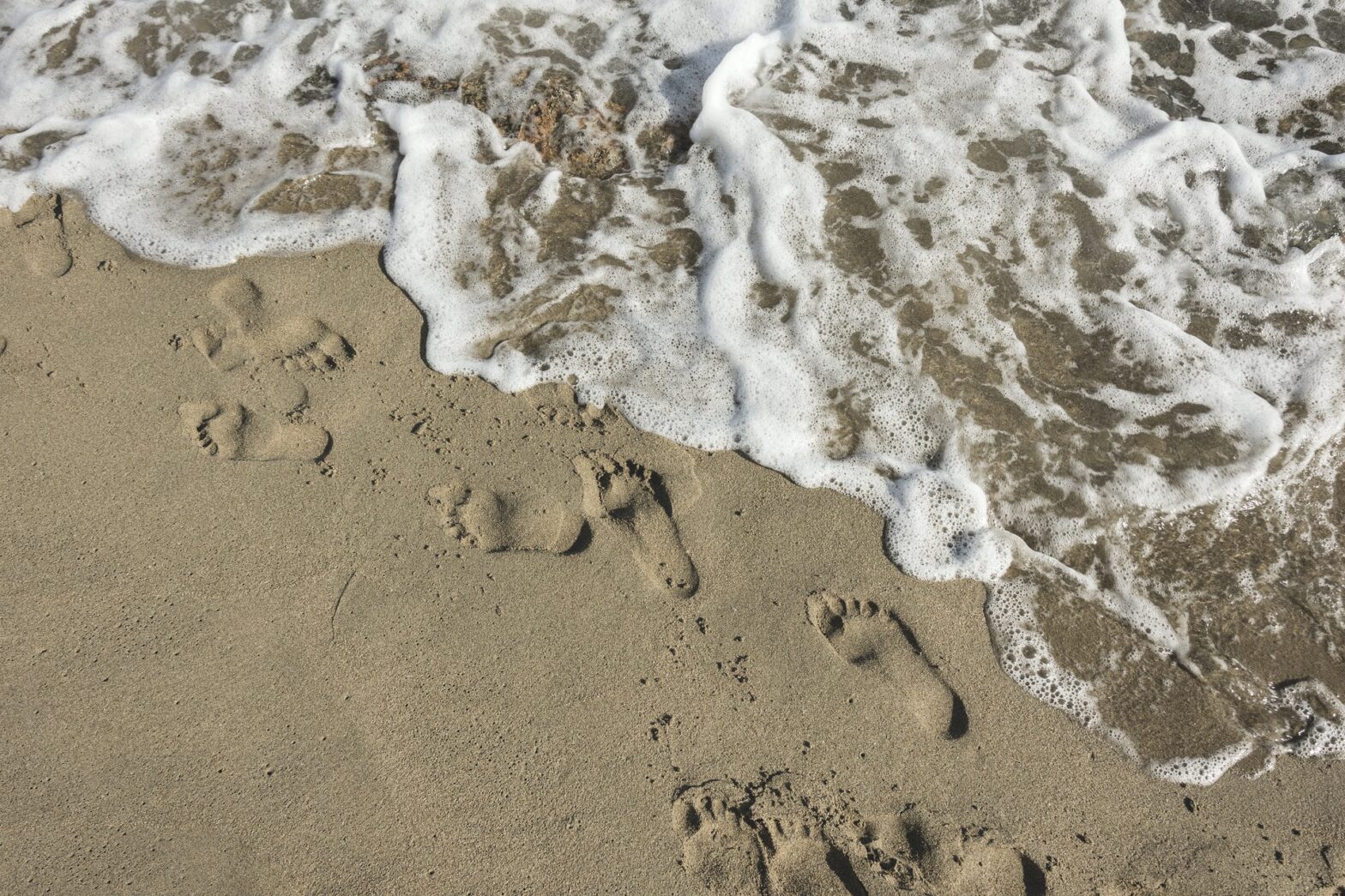
One of the most iconic things about summer running is the barefoot beach run. There’s something about the sun and the water that makes a runner want to kick off their Cliftons and dig their toes into the sand with every stride. While barefoot running deserves its own, separate blog post (or several), with summer creeping around the corner and many people planning beach trips it seems the perfect time to talk about running at the beach.
I had seen many people running barefoot on the beach during past vacations. Last year, incidentally while I was reading Born to Run for the first time, I decided it was time to give it a try. I was at the very beginning of my training cycle for the Little Apple Marathon and had already established a strong cardiovascular base. I had also nailed down my running mechanics going into the training. Observing others doing the same thing, I decided my best course of action would be to run close to the ocean, treading on the soft, damp sand. After a mile I was hooked.
There are, however, a few things I wish I had known before starting my own barefoot beach run. It’s important that you start short and slow. I was averaging 20-25 miles per week on the roads, easily hitting 4-6 miles a day. But it’s a different beast when you aren’t wearing shoes. My first run was about a mile and a half, just to feel it out. The next day I went for a four-mile out-and-back after the success of my first run. While I was fine on the first two miles, after I turned around the sand began biting into the soles of my feet. The damp sand that had been my cushion began to cut between my toes and every stride became an effort to keep my feet from chafing.
Beach runs offer unique physical and mental benefits, but high mileage runners should not expect to reproduce the same distances on the sand that they do on the road. The average beach trip is about five days, which is not enough time to build up the calluses on your feet required for longer runs. For those trying to maintain a more intense training regimen one solution is to split your workouts between road and sand. For example, run 3-5 miles in the morning on the roads and then 1-2 miles in the evening on the beach. The beach also provides an excellent opportunity for cross-training. The ocean is an excellent place to swim for 20-30 minutes before going on a 1-2 mile beach run. Just be sure to follow all posted safety warnings and guidance from lifeguards.
One argument for running barefoot is based on humans’ anatomical design and the fact that the Achilles tendon is built perfectly for the mid-foot strike promoted when running barefoot. But proponents of barefoot running sometimes forget to mention that while we may be designed to run this way, we’ve grown up essentially wearing a cast on our feet for most of our lives. In the same way that your arm or leg is weak when taken out of a cast after weeks or months of recovery, your feet aren’t ready to run miles and miles without shoes right away. As I mentioned before, this topic deserves its own blog post, but it will suffice to say it’s important to understand that, even if you assume we are designed to run barefoot, our feet need time to rebuild strength before we can start to think about removing shoes from the equation completely.
That said, there are still benefits to running barefoot on the beach, even if you only have a few days. Running short distances barefoot can help strengthen underdeveloped muscles in your feet. It’s also an incredibly low-impact event compared to running on pavement. Running is known to be tough on your bones and joints so getting even a quarter of your weekly mileage in on sand will help you recover from your more intense workouts.
While the impact is lower, the effort is often higher with beach running. Because the sand is soft, the energy return is lower on each stride. The same distance covered or time spent running on sand is about 1.6 times harder than running on pavement. The softer sand, higher up the beach, offers even more of a challenge – and more of a hazard for the barefoot runner.
If you take it in moderation, the barefoot beach run can be an enjoyable, refreshing change of pace from your standard workouts. Be mindful, though, that while sand is softer and can provide a great recovery for your skeletal system, it is also less stable than pavement and can easily lead to a sprained ankle. Watch your step and try to avoid any areas that consist of less than sure footing. The most injuries occur when athletes scale up their mileage too quickly and trying to replicate their regular training schedule on the beach.
As Covid-19 restrictions are lifting around the United States and summer is approaching, the beach offers a chance to both relax and integrate different ways of working out into your training. If you live in an area close to the coast, it might be beneficial to incorporate a beach run once a week into your schedule. If you’re traveling to the beach for a vacation don’t try to replace your regular miles with barefoot beach miles, but rather incorporate them into your plan for the week as a recovery or as a shorter workout. Finally, don’t forget to enjoy yourself. While it’s important to get a good workout in, the best thing about the beach is that it provides an opportunity to relax, reflect, and recover from the hustle and bustle of day-to-day life.
What are your thoughts on the barefoot beach run? Is it something you incorporate religiously into your beach trips or a practice you vehemently avoid? Leave a comment to let us know your tips for maximizing training at the beach!
If you liked this article, check out: Why I Lift Weights as a Runner.
Nice! I prefer Long energetic Beach walks myself, but this is a great blog!